Featured Articles
- 12 Essential Financial Tools to Optimize Tax Strategies and Maximize Year-End Savings
- 7 Game-Changing Budget Apps Released in the Last Five Years That Are Turning Money Management Upside Down
- How Ancient Calculation Methods Inspire Modern-Day Money Management Practices Beyond Technology
- The Dark Side of Financial Tools: Navigating Hidden Fees and Surprising Costs in Personal Finance Apps
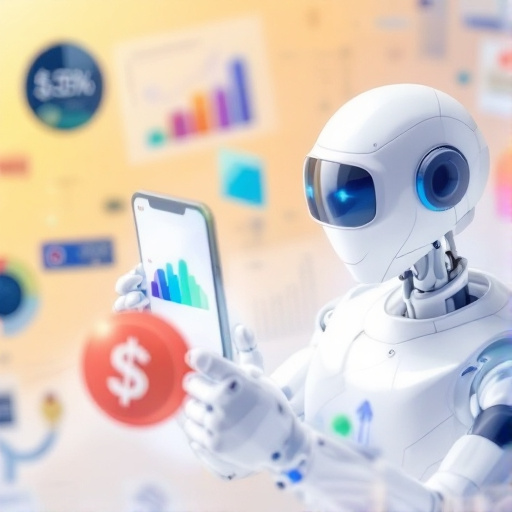
- The Rise of AI in Personal Finance: Are Robo-Advisors Really the Future or Just a Passing Trend?
The Rise of AI-Powered Financial Tools: Are They Steering Us Toward an Automated Economic Future?
The Rise of AI-Powered Financial Tools: Are They Steering Us Toward an Automated Economic Future?
The rise of AI-powered financial tools is not just transforming the way we manage money; it’s steering us toward a future dominated by automation in economic decision-making. As these sophisticated technologies evolve, they are reshaping our perceptions of financial literacy, investment strategies, and even what it means to be financially wise.
The Moment You Realize Your Buddy is a Bot
Imagine sitting across the table from your friend, “AI-Ben,” who, with the persuasive charm of a seasoned financial advisor, starts recommending investments based on what seems to be an endless sea of data. Is your investment strategy dictated by algorithms, or is it your trusty old friend guiding you through the economic jungle?
The Nuts and Bolts of AI in Finance
To understand this phenomenon, we have to break down the mechanics of AI-powered financial tools. These technologies utilize machine learning, natural language processing, and big data analytics to streamline financial management and investment strategies. According to a report by Deloitte, the global fintech market is set to surpass $310 billion by 2022, and a significant portion of that growth is due to AI integration.
Algorithms: Our New Financial Geniuses?
Let’s face it: algorithms have become the financial wizards of our time, crunching numbers at breakneck speeds and offering insights that often escape even the sharpest human minds. Take Wealthfront, for instance, an automated investment service that uses AI to help users build and manage their investment portfolios. In 2021 alone, it managed approximately $25 billion in assets, a testament to the growing trust consumers place in technology over traditional methods.
Are We Ready to Trust AI?
The core concern for many is: How much trust can we realistically place in algorithms? In our current era, 71% of consumers are willing to give their financial data to AI-powered systems if they believe it enhances their user experience (Accenture). But does this blind trust lead to vulnerability? As we become more dependent on automation, are we risking the essence of personal finance, which has often been about human intuition and judgment?
Case Study: Robo-Advisors Taking a Stance
Robo-advisors have revolutionized the investment landscape, making it accessible to the average Joe with just a few clicks. Consider Betterment, a pioneer among robo-advisors, which offers a personalized investment strategy through AI analysis. As of 2023, Betterment managed over $33 billion in assets, catering to thousands of novice investors who might have otherwise shied away from the stock market—proof that AI can indeed hold the hand of the uninitiated.
A Day in the Life with AI Financial Tools
Let me take you on a little journey: It’s Monday morning, and your day starts with your financial assistant sapphirebot buzzing to life. It checks your transactions, analyzes your spending habits, and nudges you to cut back on that gourmet coffee habit that’s siphoning away your budget dollars. Your sapphirebot even goes a step further. It recommends investing that extra change into an index fund instead! If only my real-life assistant were half as efficient, right?
Statistics That Shock
The statistics surrounding AI adoption in finance are staggering. Recently, a Financial Times report highlighted that 57% of banking executives have accelerated their investment in AI due to the COVID-19 pandemic, recognizing the undeniable shift towards digitization. Isn’t that remarkable? And yet, while we marvel at these findings, we must contemplate the impact of a world where machines could potentially govern our financial destinies.
The Perils of Automation
With great power comes great responsibility—or at least, that’s what uncle Ben would tell you. The darker side of AI in finance often goes unnoticed. Issues such as bias in algorithms and a lack of transparency could potentially lead to harmful consequences for consumers. If AI is inherently flawed, can it ever truly be trusted to make decisions that significantly impact our lives?
Humorous Mishaps in AI Finance
Picture this: You're expecting a neat and tidy summary of your finances from your favorite financial chatbot. Instead, you get a flurry of emojis and “LOL” references. “Did you really spend $300 on dog grooming this month? 🤔 Woah!” Not quite the professional touch you envisioned! These comedic moments remind us that while AI is impressive, it’s not infallible. We can chuckle, but should we also be deeply concerned?
A Balancing Act: Human Intuition vs. AI Analysis
Humans have a knack for intuition; we’ve been reading people and situations long before algorithms ever existed. A recent study by Stanford University found that human investment decisions are often more aligned with long-term growth than mere numbers. But here’s the catch: as investment mechanisms become increasingly intricate, can we still afford to rely on that gut feeling? Many people might find themselves wrestling with this question as they navigate an ever-complicated financial landscape.
The Road Ahead: Embracing Change
As with any new technology, there’s a learning curve that accompanies AI in finance. The key lies in embracing change while maintaining an active role in our financial decisions. Financial literacy becomes essential—understanding not just how to use these AI tools, but how they actually work and the algorithms that guide their recommendations. As users, we must remain vigilant and informed.
Are We Heading Toward a Fully Automated Economic Future?
Well, that depends on how adaptable we are. Are we ready to relinquish our roles in financial decision-making to machines that learn and adapt faster than we can? While total automation seems like a pipe dream, the landscape is undoubtedly shifting. According to a McKinsey report, up to 45% of the tasks currently performed by finance employees could be automated with AI by 2030—but it all ultimately boils down to what we, as consumers, deem valuable.
The Counterargument: AI Isn’t Everything
It would be short-sighted to think that AI is the panacea for all financial woes. The human touch cannot be replaced entirely; empathy, understanding, and context are qualities that machines just can’t replicate. Financial advisors and counseling services will still play crucial roles in guiding consumers through complex situations. Additionally, the ethical implications of increased automation require careful consideration—after all, can an algorithm truly understand the depth of human emotions surrounding money?
Conclusion: A New Era Awaits
In the end, AI-powered financial tools allow us unprecedented access to data-driven insights and automated management of our finances. Yet, as we stand on the cusp of this automated future, let’s not forget the integral role of human intelligence and the wisdom of economic choices forged by experience. As consumers, we must embrace this tech revolution while staying firmly grounded in our financial philosophies and innate human understanding.
So, the next time you interact with your AI-powered financial tool, think about this: Is it just the latest trend, or is it a glimpse into a future where algorithms hold the keys to our financial successes and failures? Buckle up; it’s going to be a wild ride!
Related Articles